Learn Vietnamese with Rosetta Stone
GET STARTEDHave you ever dreamt of learning Vietnamese? You’re not alone. Spoken by more than 90 million people worldwide, Vietnamese is the national language of Vietnam and an important bridge to one of Southeast Asia’s fastest-growing regions. It offers rich cultural traditions, a unique tonal system, and direct access to Vietnamese history, cuisine, and daily life.
Still, getting started can feel overwhelming. But here’s the good news: learning Vietnamese is a deeply rewarding experience. With the right approach, you’ll soon see real progress.
IN THIS GUIDE
Why learn Vietnamese?
Mastering a second language brings countless benefits, and Vietnamese is both practical and culturally enriching. Whether your goal is personal growth, career development, or travel, Vietnamese can open new doors.
Top reasons to learn Vietnamese
- Career opportunities: Vietnam’s economy is rapidly growing, with increasing international trade and business.
- Sharpen your mind: Learning a tonal language develops listening precision and cognitive flexibility.
- Cultural immersion: Enjoy Vietnamese literature, music, and film in the original language.
- Enhance your travels: Explore Vietnam with confidence — from Hanoi and Ho Chi Minh City to small towns and villages.
- Family and friends: Connect deeply with Vietnamese-speaking relatives and communities.
- Global community: Vietnamese is spoken by large diaspora communities across the U.S., Europe, and Australia.
Vietnamese language basics
Where is Vietnamese spoken?
Vietnamese is the official language of Vietnam, and it’s also spoken by millions abroad. It belongs to the Austroasiatic language family but has been heavily influenced by Chinese and French.
How long does it take to learn Vietnamese?
Consistency matters most. With just 15 minutes a day, you can begin basic conversations in weeks. Fluency takes time, but Rosetta Stone helps you start speaking early and naturally.

How to learn Vietnamese
Beginner
Focus on pronunciation and essential grammar:
Greetings and introductions
Asking basic questions
Talking about people and things
Learning pronouns and classifiers (một cái bàn – one table)
Intermediate
Build on the basics:
Explore verb phrases (Vietnamese verbs do not conjugate for tense)
Expand vocabulary
Learn sentence particles for nuance
Advanced
Approach fluency by refining skills:
Master idiomatic expressions
Understand regional variations (Northern vs. Southern speech)
Study specialized vocabulary (business, technology, literature)
What's included with your subscription
All-access subscription
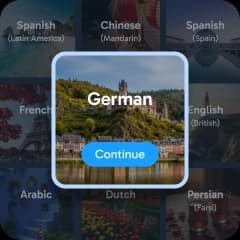
Access to all 25 of our languages
Immersive lessons
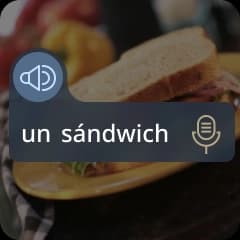
Master your new language with immersive lessons and our TruAccent speech tool

Chat Missions
Fun, realistic conversation practice with Chat Missions

Flashcards
500+ flashcard sets to learn the words you care about

Sapphire Studio
Create your own learning materials on any topic in Sapphire Studio
What our customers are saying

I absolutely love the approach that Rosetta Stone utilises. It feels like a natural and fun way to learn a new language. I also appreciate that I’m able to squeeze lessons in when I only have 10 minutes… and it’s a more productive and enjoyable activity than getting sucked into online scrolling just to distract myself. Why not learn a new language instead?
― Turner
I have been using Rosetta Stone for over 30 years. By far, this is the best app for language learning. There are no language crutches, only immersion. You learn in a natural way and move forward quickly. Apps with games are fun, but you learn more slowly, and you are always “translating”, not immersing. Rosetta Stone makes language learning interesting and efficient.
― GrahamAbout Learning Vietnamese with Rosetta Stone
On Rosetta Stone, Vietnamese learning is built around clear listening, accurate pronunciation, and steady speaking confidence. Early activities emphasise tone awareness, helping learners recognise how pitch and intonation shape meaning in everyday words. Through visual context and audio support, vocabulary and sentence patterns are introduced in a way that connects sound, spelling, and meaning using the Latin-based chu Quoc ngu system.
Learning Vietnamese requires balancing accessible grammar with careful attention to pronunciation. Because tones are essential to meaning, many learners place early focus on listening and speaking while gradually expanding practical vocabulary for daily use. Core phrases and common sentence structures provide a foundation for real communication. Over time, regular exposure to spoken Vietnamese through audio or video helps learners become comfortable with rhythm, pacing, and regional pronunciation differences.
Vietnamese skills become more effective when practice is integrated into everyday routines. Speaking phrases aloud, repeating audio models, or listening closely to native conversations helps reinforce tone accuracy and comprehension. When these habits are combined with the structured lessons and pronunciation guidance available on the website, progress becomes more natural and consistent. With ongoing practice, learners develop the confidence to understand spoken Vietnamese, express ideas clearly, and connect meaningfully with Vietnamese-speaking communities.